learn3 min read
How Many Planets Make a Stellium? (3 or 4)
A stellium is three or more planets in the same sign or house. Learn the exact definition, whether the Sun and Moon count, and how rare they are.
Natal AI Team
Astrology & AI Research ·
A stellium is three or more planets in the same sign or house. Learn the exact definition, whether the Sun and Moon count, and how rare they are.
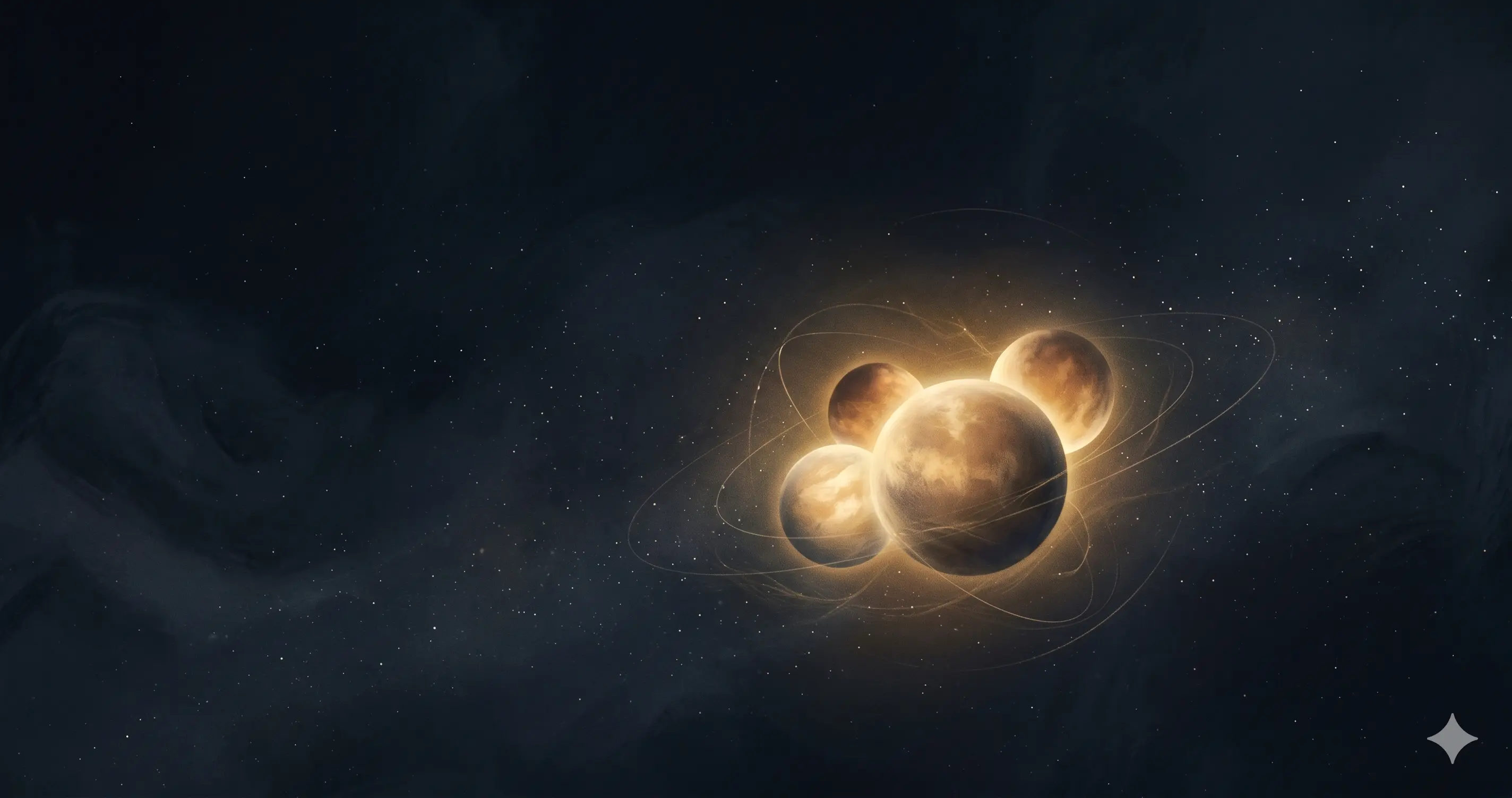
A stellium is three or more planets clustered in the same zodiac sign or house. Three is the most widely accepted minimum; some traditional astrologers raise the bar to four, especially when the Sun and Moon are not part of the group. The key point most beginners miss: a stellium is defined by the planets, not the sign — the sign or house only tells you where all that concentrated energy is pointed.
If you found this page after seeing "3 or more planets in the same sign or house" and wondered whether that really counts, this guide settles the debate, explains whether the Sun and Moon count, and shows how rare stelliums actually are.
Astrologers don't fully agree, so here is the honest breakdown:
| Standard | Minimum planets | Common among |
|---|---|---|
| Modern / popular | 3 | Most apps, modern Western astrologers |
| Traditional / strict | 4 | Classical astrologers, some teachers |
Most modern astrology — and every major astrology app — treats three planets in one sign or house as a stellium. The stricter, traditional view asks for four, on the logic that three planets (especially when two of them are the fast-moving Mercury and Venus) is too ordinary to be remarkable.
Our take: three planets is a real stellium, but a four- or five-planet stellium is where the effect becomes a defining force in the chart.
Yes. In astrology the Sun and Moon are counted as "planets" (technically luminaries), and they count toward a stellium.
This matters because Mercury and Venus never stray far from the Sun. That orbital fact makes the Sun–Mercury–Venus stellium the single most common type — many people have it without realizing. It's also why strict astrologers discount three-planet clusters that lean on Mercury and Venus: they're simply more frequent.
It depends on the size:
So "are stelliums rare?" has a two-part answer: the basic kind isn't, but the dramatic, life-defining kind is.
for reflection & self-knowledge — not prescription.
A neural network builds your natal chart from your birth date, time, and place, then explains each planetary placement in plain conversation.
Keep reading →
Sanctuary connects you with live astrologers for paid per-session readings plus free daily horoscopes. See its 2026 pricing and a cheaper AI pick.
Keep reading →
Learn to read a synastry chart step by step: how one person's planets fall in the other's houses and which aspects reveal relationship chemistry.
Keep reading →
To see whether you have a stellium, generate your chart and look for three or more planet glyphs crowded into one slice of the wheel (a sign) or one wedge (a house).
Once you've found it, the harder question is what the cluster means together — and that's where most tools fall short, because they interpret each planet in isolation. Natal AI synthesizes the whole cluster into one reading, so a Mars–Venus–Mercury group in Leo becomes a single, coherent story rather than three disconnected paragraphs.